Thai massage in Budapest: what to expect and how to choose a salon
Walk down Király utca, or almost any street in District VI or VII, and you'll pass at least one Thai massage salon. Often two or three. For visitors it can be a bit puzzling. Why are there so many, how do you tell them apart, and are they any good? The short answer is that most of them are good, quite a few are excellent, and an hour on the mat costs a lot less than it would in London, Vienna or Munich.
8 October 2026 · 6 min read
Why are there so many Thai salons in Hungary?
There isn't one real reason. Hungary has a long bathing and massage culture thanks to its thermal spas, so locals were already used to paying for a massage. Thai massage arrived on top of that and caught on quickly, partly because it feels so different: you stay clothed, there's a lot of stretching, and it feels more like being worked on than pampered. A Thai salon is also fairly simple to set up. It needs a few rooms, mats or beds, plenty of towels and trained therapists. Once the first few salons proved popular, more followed, and some grew into chains with several branches around the city. Add a steady stream of tourists and a lot of office workers whose backs have had enough by Friday, and the demand is there all year round.
Chain or small salon?
Both have their fans, and it really comes down to what you want. Chains tend to be predictable in a good way. You can usually book online, the reception staff speak English, prices are clearly listed, and if you like one branch you'll probably like the others. They're also the easiest place to buy a gift voucher. Small, owner-run salons can be more personal. You might see the same therapist every visit, and after a while they'll know that your left shoulder is the problem without being told. Some are a little cheaper too. The flip side is that quality varies more from one small place to the next, so reviews matter more. If it's your first Thai massage, a well-reviewed chain is a safe start. Once you know what you like, try a few of the smaller places. Some of the best massages in the city happen in salons with three rooms and a hand-painted sign.
How affordable is it?
Very, by Western European standards. Most salons in central Budapest charge roughly 9,000 to 14,500 HUF for an hour of traditional Thai massage. A handful of more upmarket places charge 16,000 HUF or more, with the top end around 24,000 HUF. Thirty-minute back or foot massages cost less again, and many salons give a discount for booking online or buying a package of sessions. Prices do creep up, so check the salon's own website before you go rather than trusting an old blog post (this one included, eventually).
Avoiding the wrong kind of salon
It would be silly to pretend this never comes up. A small number of places in Budapest use the word "massage" as cover for sexual services, and every so often someone books what they think is a normal Thai massage and ends up somewhere they'd rather not be. Fortunately these places are usually easy to spot once you know what to look for. A legitimate salon will normally have: • a real street address you can find on a map, ideally with a shopfront • a full price list on its own website, with treatments described in plain language • photos of its rooms and reception rather than of its staff • normal opening hours, and a receipt when you pay Be wary of a menu that lists "tantra", "body to body" or a vague "special" or "VIP" massage alongside the usual treatments, as these are the usual euphemisms. A website that's mostly photos of young women, prices that make no sense for the time booked, or an address in a residential flat with no sign on the door are other giveaways. If a place is vague about what it's actually selling, treat that as a no. If you're ever offered something you didn't ask for, even in a respectable-looking salon, you're entitled to say no, end the session and leave. An honest review afterwards helps the next person.
Are the therapists properly trained?
At a good salon, yes. Many of the Thai therapists working in Budapest trained in Thailand, where Thai massage is taught at dedicated schools that certify students after a set course of hours. Plenty of them had years of experience before they ever came to Hungary, and you can feel it within the first five minutes. That said, training does vary, which is one more reason to read reviews. People are quick to say when a "Thai massage" turned out to be a gentle oil rub with no stretching at all.
What qualifications do they need?
In Hungary, medical massage (the kind done in hospitals and rehabilitation centres under the direction of a doctor or physiotherapist) is a health profession with its own training route, known as gyógymasszőr. Wellness and relaxation massage has a separate vocational qualification, aimed at refreshing, preventive massage rather than treating medical problems. Therapists from outside the EU also need a permit that lets them live and work here, and the application can include proof of their qualifications. In practice, a Thai salon offers wellness massage, not medical treatment. If you have an injury or a medical condition, see a physiotherapist or a qualified medical masseur first. For everyday stiffness, stress and tired legs, a well-trained Thai therapist is exactly who you want. Don't be shy about asking where your therapist trained, either. Good salons are proud of it and happy to tell you.
Tipping
Tipping isn't compulsory, but it's normal and appreciated. Around 10 to 15% is typical. Cash is best, because card machines in smaller salons often can't add a tip, and if you can, hand it to your therapist rather than leaving it at reception.
Hygiene and cleanliness
This is one of the easiest things to judge for yourself, and good salons take it seriously. Expect fresh sheets and towels for every client, clean loose clothes to change into for a traditional massage, and a tidy room that doesn't smell stale. Many salons wash your feet before the massage starts, which is a lovely tradition and a good sign. Your therapist should have short, clean nails and wash their hands between clients. If the towels look tired, the room smells musty or the mats are stained, that tells you how the place is run. There are plenty of others to choose from.
Types of Thai massage you'll see on the menu
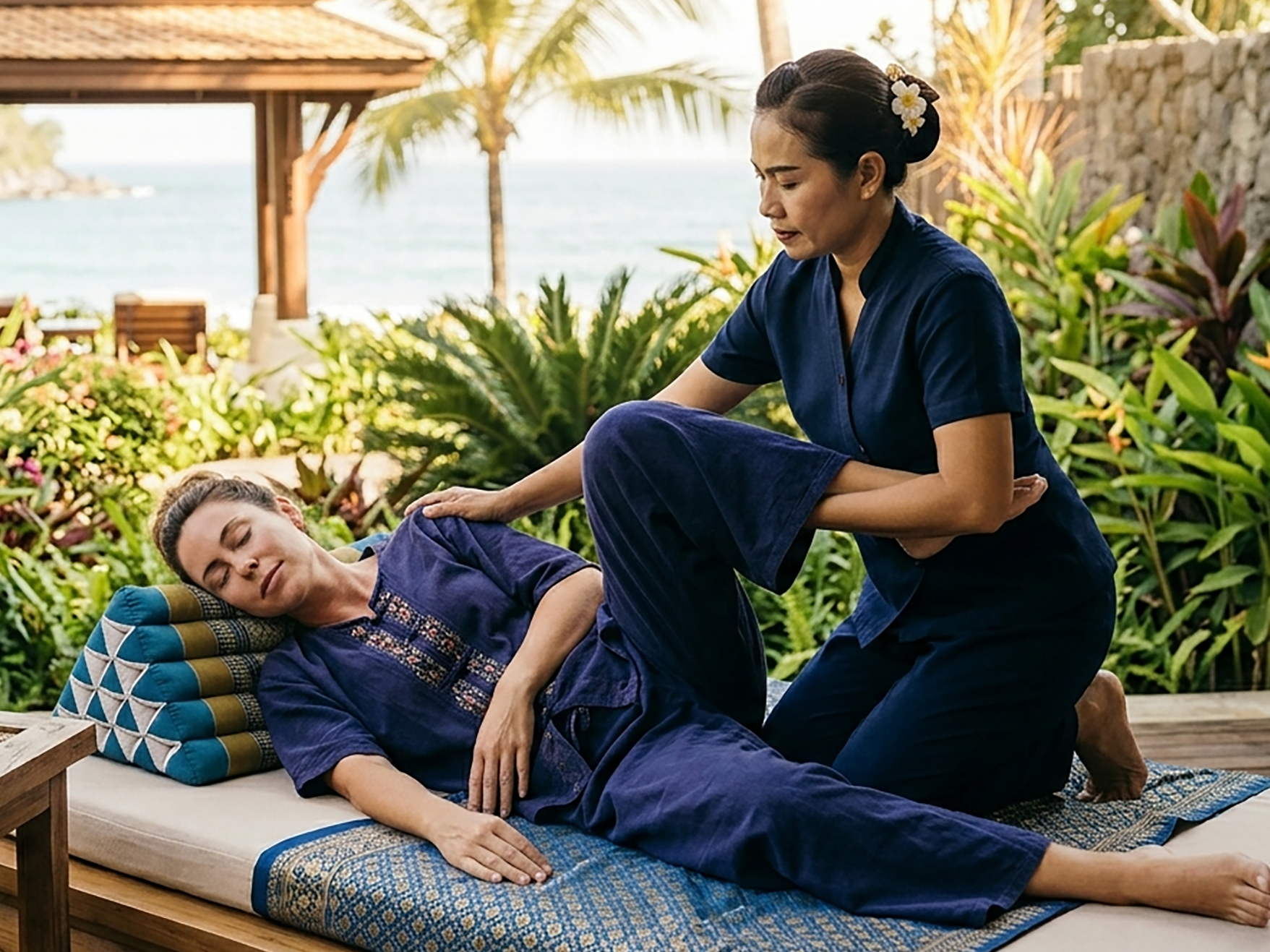
Traditional Thai massage is the classic. There's no oil, you stay in loose clothing, and the therapist uses palms, thumbs, elbows and sometimes knees and feet, with lots of assisted stretching. It can be firm, so say if you'd like it lighter. People sometimes call it lazy man's yoga, which isn't far off. Thai oil or aroma oil massage is smoother and gentler, closer to what most people picture when they think of a massage. It's the one to pick if you mainly want to switch off. Thai foot massage works on the feet and lower legs using pressure points and a little wooden stick. After a day walking up and down the Castle District, it's hard to beat. Herbal compress massage uses warm cloth bundles filled with herbs, pressed and rolled over the muscles. It smells wonderful and is particularly good in winter. You'll also see head, neck and shoulder massages for desk workers, hot oil massages, four-hand massages with two therapists at once, and couples' rooms so you can book together.
So, is it worth it?
For most people, very much so. Pick a well-reviewed salon, book a traditional hour, tell the therapist where it hurts and bring some cash for the tip. The usual risk isn't a bad experience. It's that you'll want to come back the following week.
You can view our listings for Thai Massage Salons here.